
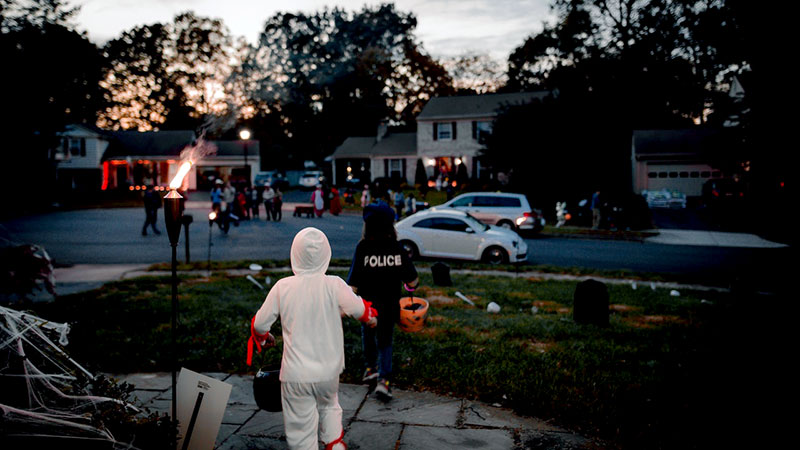
While Halloween is generally a fun and exciting holiday, for children with hearing loss, Halloween can be downright scary if the proper precautions are not met and Halloween hearing safety tips are not followed. While this can go for anyone, children with hearing loss need extra consideration this holiday, so they can fully enjoy dressing up and collecting treats. Following these simple Halloween hearing safety tips can help ensure a fun and safe time for everyone involved.
• Since treat or treating generally goes on at dusk and at night, make sure your child can see where they are going. Don’t let them out of the house without a flashlight so they can illuminate the walkways as they travel from house to house.
• Besides ensuring your child can see where they are going, also be sure that others can see them as well. While a flashlight works, you don’t want that to be the only method. Have your child wear a light-up item or a few pieces of reflective tape on their clothing so that they cannot be missed.
• Never let your child go trick or treating alone, even if they are old enough. It can be easy to become disorientated at night or possibly get lost. If they are old enough, make sure they are with a group of friends who can be trusted or who are chaperoned. If they are still too young, make sure you or a trusted person is trailing close behind.
• If your child wears hearing aids, make sure you bring along the emergency supply kit or at least an extra set of batteries. The last thing you want is your child’s hearing aids to cut out during the night because the batteries have run out of juice. Also, make sure your child’s hearing aid is working properly before you hit the neighborhood.
• If your child is planning on wearing a face mask, and they wear hearing aids, make sure you do a test run either before you purchase the mask or before you go out trick or treating. Some costumes may interfere with the hearing aid, making it hard to hear. If this is the case, opt for face paint instead.
In addition, here are some helpful tips from the American Academy of Pediatrics that everyone should follow to have a safe Halloween.
• Make sure everyone has a flash-light, with fresh batteries. Don’t forget a pair of backup batteries!
• Only walk on well-lit streets. Avoid low light blocks that are empty.
• Always walk on the sidewalks, and look both ways before crossing the street.
• Make sure you are visible to others, especially at night.
• Never eat homemade food items from unknown neighbors.
• Always check your loot before consumption to ensure the package was not tampered with.
Frequently Asked Questions
Children with hearing loss should carry a flashlight to see where they are going, wear reflective or light-up items to ensure visibility, never trick-or-treat alone, and have their hearing aids checked and spare batteries on hand to avoid technical issues during the night.
Some face masks or costume accessories can interfere with the fit and function of hearing aids, potentially making it harder for the child to hear. It is recommended to do a test run with the costume and hearing aids before Halloween; if interference occurs, consider using face paint as an alternative to masks.
Because children with hearing loss might not hear approaching dangers like vehicles or others, wearing light-up or reflective items ensures they are easily seen by drivers and other pedestrians, increasing their safety during night-time activities.
To ensure safety, children should never consume homemade treats from strangers, and all candy should be inspected carefully for tampering or damage before eating. This reduces the risk of allergic reactions or unsafe food consumption.
Navigating unfamiliar areas at night can be disorienting or risky, particularly for children who might not hear warning sounds. Having a trusted companion or adult nearby ensures the child's safety and provides assistance if needed.
General safety tips include carrying a flashlight with fresh and backup batteries, walking only on well-lit sidewalks, being visible to others, looking both ways before crossing streets, avoiding low-traffic or dark areas, refraining from eating homemade foods from unknown sources, and checking candy for tampering.