
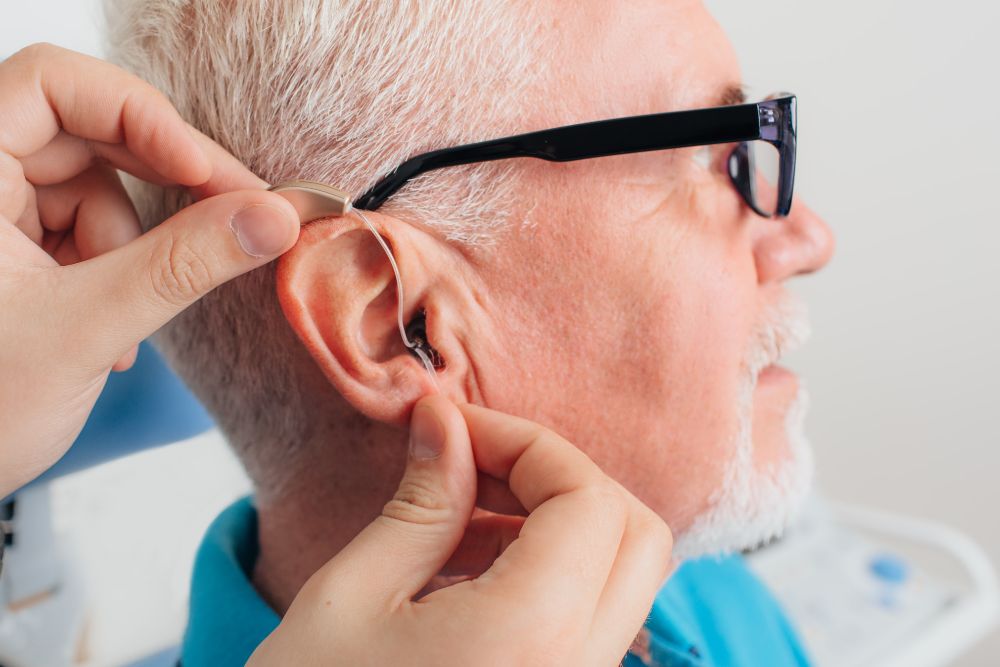
If you are having difficulty hearing conversations, following discussions in noisy environments, turning up the television, or understanding speech clearly, a hearing aid evaluation can help determine whether hearing aids are appropriate for you and which solutions may best fit your needs. At The New York Hearing Center, our audiology professionals provide comprehensive hearing evaluations and personalized hearing aid recommendations based on your hearing loss, communication needs, lifestyle, and individual goals.
What Is a Hearing Aid Evaluation?
A hearing aid evaluation is a comprehensive assessment used to determine whether hearing aids may benefit you and, if so, what type of hearing technology is most appropriate for your hearing loss and daily needs.
A hearing aid evaluation goes beyond simply determining whether you have hearing loss. Your audiologist considers the degree and type of hearing loss, how well you understand speech, the situations in which hearing is most difficult, your communication priorities, and any other symptoms or medical factors that may affect your hearing. This information helps create a more personalized recommendation rather than relying on a one-size-fits-all hearing aid solution. The evaluation may also help identify whether your hearing difficulties could be related to another condition that should be addressed before or alongside hearing aid treatment.
Why Do I Need a Hearing Aid Evaluation?
Hearing loss can affect people differently. Two people with similar hearing test results may have very different communication needs and may benefit from different hearing technology.
A hearing aid evaluation helps your audiologist understand how hearing loss affects your everyday life and what you want to accomplish with hearing treatment. You may have particular difficulty hearing in restaurants, understanding family members, participating in meetings, hearing on the telephone, or following conversations when several people are speaking.
Your evaluation provides the information needed to match hearing technology to those real-world situations. It can also help determine whether hearing aids are the appropriate treatment or whether another type of hearing treatment or medical evaluation should be considered.
What Happens During a Hearing Aid Evaluation?
A hearing aid evaluation typically begins with a discussion of your hearing history, symptoms, communication difficulties, and treatment goals. Your audiologist may ask when you first noticed changes in your hearing, whether your hearing has changed gradually or suddenly, and which listening situations are most challenging.
Your evaluation may include a comprehensive hearing test and other assessments used to understand how you hear different frequencies and how well you understand speech. Your audiologist may also ask about symptoms such as tinnitus, dizziness, ear pressure, ear pain, or drainage because these symptoms can provide important information about your overall ear health. The results are then used to determine whether hearing aids may be appropriate and what characteristics the devices should have to address your specific hearing needs.
What Does a Hearing Test Measure?
A hearing test provides information about the type and degree of hearing loss and how well your auditory system detects different sounds.
Depending on your symptoms and clinical needs, testing may evaluate:
- Hearing sensitivity across different frequencies
- The degree of hearing loss in each ear
- Speech detection and speech understanding
- Differences between the two ears
- Middle-ear function when indicated
- Other aspects of hearing and auditory function
Your audiologist will explain the results and what they mean for your everyday hearing. Understanding your hearing profile is an important part of determining whether amplification may be helpful.
How Does Hearing Loss Affect Daily Life?
A hearing aid recommendation should take into account more than your hearing test results. Your communication needs and lifestyle can influence what type of hearing technology is most useful.
During your evaluation, you may discuss situations such as:
- Understanding conversations at home
- Hearing family members or friends
- Participating in meetings
- Listening in restaurants or other noisy environments
- Hearing in large groups
- Using the telephone
- Watching television
- Communicating at work
- Attending social events
- Hearing alarms and other important environmental sounds
This information helps your audiologist understand where hearing loss is creating the greatest challenges and which hearing aid features may be most useful.
Choosing the Right Hearing Aids
There is no single hearing aid that is right for everyone. Hearing aids are available in different styles and with different features, levels of technology, and connectivity options.
Your audiologist can help you compare hearing aid options based on factors such as:
- Your degree and type of hearing loss
- Whether one or both ears require amplification
- Your communication environments
- Your lifestyle and daily activities
- Your preferences regarding hearing aid size and appearance
- Rechargeable versus replaceable batteries
- Bluetooth and wireless connectivity
- Smartphone compatibility
- Noise-management features
- Directional microphone technology
- Feedback management
- Compatibility with assistive listening technology
The goal is to select technology that provides an appropriate balance of hearing performance, comfort, usability, and functionality for your individual needs.
Hearing Aids for Different Types of Hearing Loss
Hearing aids are commonly used for people with sensorineural hearing loss, but the appropriate treatment depends on the underlying cause and type of hearing loss. Some people have conductive or mixed hearing loss, which may require medical or surgical treatment, specialized hearing technology, or a combination of approaches.
This is one reason a comprehensive hearing evaluation is important before purchasing or being fitted with hearing aids. Your hearing care team can determine whether conventional hearing aids are appropriate or whether another treatment approach should be considered.
Hearing Aid Fitting and Programming
Once you have selected hearing aids, proper fitting and programming are important parts of achieving good results. Your audiologist programs the devices based on your hearing test results and individual hearing needs. The fit should also be comfortable and secure, allowing the hearing aids to provide appropriate amplification without unnecessary feedback or discomfort. Your audiologist can show you how to insert and remove your hearing aids, change or charge the batteries, clean and maintain the devices, and use their available features.
Hearing aid fitting is not necessarily a one-time process. Follow-up appointments may be needed to fine-tune the devices as you become accustomed to amplified sound and provide feedback about what you are experiencing in everyday situations.
Adjusting to New Hearing Aids
It can take time to adjust to hearing aids, particularly if you have been living with hearing loss for an extended period. Sounds may initially seem unfamiliar or more noticeable than you remember. Your brain may need time to adapt to having greater access to speech and environmental sounds. Consistent use can help you become more comfortable with your hearing aids, while follow-up care allows your audiologist to make adjustments based on your experience.
If you continue to struggle in particular listening environments, your audiologist can evaluate whether changes to the hearing aid programming, additional technology, communication strategies, or aural rehabilitation may be helpful.
Hearing Aids and Background Noise
One of the most common complaints among people with hearing loss is difficulty understanding speech in background noise. Restaurants, crowded gatherings, meetings, and other noisy environments can be challenging because competing sounds make it harder to distinguish speech from surrounding noise.
Modern hearing aids may include features designed to improve listening comfort and speech access in noisy environments. However, hearing aids cannot eliminate all background noise or restore normal hearing. Your audiologist can help determine which technology and communication strategies are appropriate for the environments in which you most often have difficulty hearing.
Hearing Aid Technology and Connectivity
Today’s hearing aids can offer more than traditional amplification. Depending on the device, technology may include wireless connectivity, smartphone integration, rechargeable power, automatic environmental adjustments, and compatibility with other devices. Bluetooth-enabled hearing aids may allow compatible smartphones and other devices to connect directly with the hearing aids for phone calls, music, video, and other audio.
Not everyone needs every available feature. Your audiologist can help identify which technologies are likely to provide meaningful benefits based on how you use your hearing aids and the situations in which you communicate most often.
What If Hearing Aids Are Not Enough?
Hearing aids are an effective treatment option for many people with hearing loss, but they are not appropriate for every hearing condition or every degree of hearing loss. If hearing aids do not provide enough benefit, your hearing care team may evaluate whether additional treatment or technology should be considered. Depending on your hearing profile and medical history, options may include assistive listening devices, bone-anchored hearing technology, cochlear implants, aural rehabilitation, or medical or surgical treatment. The appropriate option depends on the underlying hearing condition and the amount of benefit you receive from amplification.
When Should You Get a Hearing Aid Evaluation?
You may benefit from a hearing aid evaluation if you frequently ask people to repeat themselves, have trouble understanding conversations, increase the television volume, struggle to hear in restaurants or groups, or find that hearing loss is interfering with work or social activities. You should also consider an evaluation if you already have hearing aids but feel that they are no longer providing the benefit you need. Changes in hearing, hearing aid programming, device condition, or communication needs can all affect how well your hearing aids work for you. A hearing evaluation is also appropriate when hearing changes occur alongside symptoms such as tinnitus, dizziness, ear pain, pressure, or drainage. These symptoms may indicate an underlying ear condition that should be evaluated.
Hearing Aid Evaluations for First-Time Hearing Aid Users
If you have never worn hearing aids before, the evaluation is an opportunity to understand your hearing loss and learn what treatment options are available before making a decision. Your audiologist can explain your hearing test results, discuss how hearing loss is affecting your communication, demonstrate appropriate hearing technology, and explain what you can realistically expect from hearing aids. The goal is to make the process understandable and personalized rather than simply selecting a device based on its features or appearance.
Hearing Aid Evaluations for Current Hearing Aid Users
A new hearing aid evaluation can also be useful if you already wear hearing aids. Your hearing may have changed since your previous evaluation, your current devices may no longer meet your needs, or you may be experiencing difficulty in situations that were previously manageable. Technology also continues to evolve, giving some patients access to features that were not available when their current devices were purchased. A new evaluation can help determine whether adjustments, new hearing aids, additional hearing technology, or a different rehabilitation approach would provide greater benefit.
How Often Should Your Hearing Be Evaluated?
The appropriate frequency of hearing evaluations depends on your age, hearing history, symptoms, and individual risk factors. People who already have hearing loss may benefit from periodic hearing testing to identify changes over time. A new evaluation is particularly important if you notice a significant change in hearing, new tinnitus, dizziness, ear pain, or other symptoms. Your audiologist can recommend an appropriate follow-up schedule based on your hearing health.
Why Choose The New York Hearing Center for a Hearing Aid Evaluation?
At The New York Hearing Center, hearing aid evaluations are part of a comprehensive approach to hearing healthcare. Our team includes audiology professionals and ENT physicians who can evaluate hearing concerns, identify potential underlying conditions, and help determine appropriate treatment options. We consider more than your audiogram when making hearing aid recommendations. Your communication needs, lifestyle, listening environments, symptoms, preferences, and treatment goals all play a role in determining which solution may be right for you.
Our goal is to help you understand your hearing loss and make an informed decision about hearing technology, whether you are considering your first hearing aids or looking for a better solution than your current devices.
Frequently Asked Questions
A hearing aid evaluation is a comprehensive assessment that determines whether hearing aids are suitable for you and identifies the most appropriate hearing technology based on your hearing loss, communication needs, lifestyle, and goals. It goes beyond detecting hearing loss by considering speech understanding, listening environments, and any related medical factors to provide personalized recommendations.
During a hearing aid evaluation, your audiologist reviews your hearing history, symptoms, and communication challenges. The process includes comprehensive hearing tests to measure hearing sensitivity, speech understanding, and middle-ear function if needed. The audiologist also discusses your lifestyle and goals to determine if hearing aids are appropriate and which features will best address your needs.
Hearing loss impacts various daily activities such as understanding conversations, hearing on the phone, and listening in noisy environments. Your communication needs and lifestyle influence the type of hearing aid features that will be most beneficial. By discussing these factors during the evaluation, your audiologist can recommend hearing aids that improve your hearing in the situations that matter most to you.
Hearing aids come in various styles with different features, technology levels, and connectivity options. Your audiologist helps you choose based on your degree and type of hearing loss, whether one or both ears need amplification, your communication environments, lifestyle, and preferences such as size, battery type, and smartphone compatibility. The goal is to balance hearing performance, comfort, and usability.
Hearing aids are most commonly used for sensorineural hearing loss, but the appropriate treatment depends on the type and cause of hearing loss. Some cases of conductive or mixed hearing loss may require medical or surgical treatment or specialized technology. A comprehensive hearing evaluation is essential to determine if hearing aids are suitable or if other treatments are needed.
After selecting hearing aids, your audiologist programs them based on your hearing test results and personal needs to ensure proper amplification and comfort. The fitting process includes adjusting the devices to prevent feedback and discomfort, teaching you how to use and maintain them, and scheduling follow-ups to fine-tune settings as you adapt to amplified sounds.
Adjusting to new hearing aids can take time, especially if you have had hearing loss for a long period. Initially, sounds may seem unfamiliar or louder, and your brain needs to adapt to the increased access to speech and environmental sounds. Consistent use and follow-up care with your audiologist help improve comfort and address any challenges in specific listening environments.