
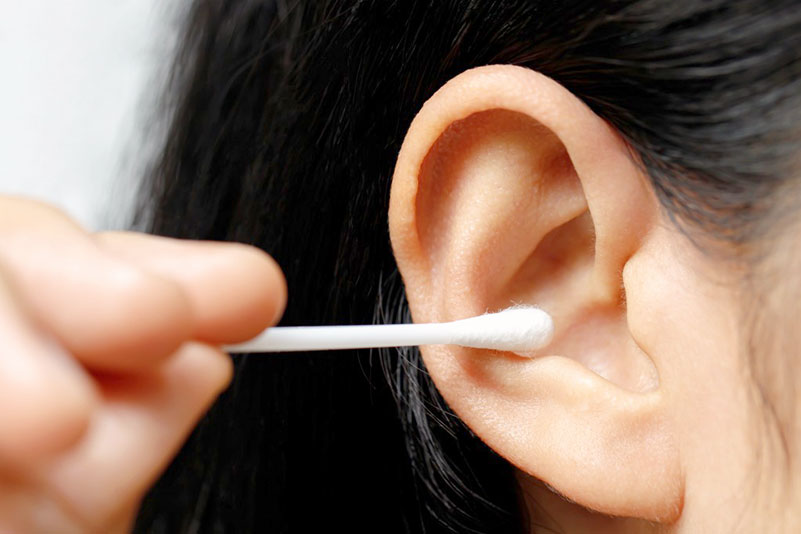
Did you know that your ears are self-cleaning? While you may not believe it, they are self-cleaning, so there’s no need for routine maintenance. Earwax and debris slowly move out of the ear canal opening naturally courtesy of the ear’s design and from the motion of talking and eating. While inserting cotton-tipped swabs into your ears can make the problem worse by pushing earwax farther into the ear canal. However, there are exceptions, of course, as some people produce excessive earwax, which can be uncomfortable and cause temporary hearing loss. When this occurs, professional earwax removal is recommended.
Professional earwax removal is recommended if your ears produce excess earwax or if your earwax has become hard and dry. It is best to have your ears cleaned by a professional, especially if you experience symptoms due to impacted earwax. If you are thinking about cleaning your ears yourself, hold off until you learn the reasons why you should see a doctor for earwax extraction.
• Have you ever tried to clean something you can’t see? It’s an impossible feat, and unfortunately, it is nearly impossible to see the inside of your ears. Standing in front of and holding up multiple mirrors to see inside your ear will not cut it. While a hearing care specialist is qualified to examine the inside of your ear, safely remove impacted earwax and other debris, and see if there is a serious problem that needs to be addressed.
• Having the tools necessary makes any job more manageable and increases its likelihood of being carried out successfully. This rule of thumb can apply to any profession, so it makes sense to see a specialist for professional earwax removal. An ENT specialist will carry specialized tools to remove impacted earwax and any other particles and deep-seated germs. Helping you take care of your problem without making it worse.
• Cleaning your ears at home can cause more problems for you, even if the initial act of cleaning feels satisfying. It can be dangerous to insert a cotton-tipped swab into your ear to remove excess earwax, and it can make the problem worse. Earwax can get pushed further into the ear canal, and if it gets pushed down far enough, it can lead to painful ear infections. Also, inserting anything into the ear can damage the eardrum or eardrum. In either case, an ear infection and having a perforated eardrum can be painful, so see an ENT specialist to clean your ears safely.
• Seeking a professional diagnosis is always the best case of action, especially if you aren’t sure which treatment method is best for you. In some cases, blockages cannot be treated immediately. Instead, they need to be taken care of over the course of a few days. Trying to diagnose your own treatment plan is risky and could lead to further problems. Instead, contact an otolaryngology professional to come with a treatment plan tailored to your unique needs.
Frequently Asked Questions
Yes, your ears are naturally self-cleaning. Earwax and debris gradually move out of the ear canal due to the ear's design and regular movements such as talking and eating, which help with this process.
Using cotton-tipped swabs can push earwax deeper into the ear canal, potentially worsening blockages. This can lead to painful ear infections or damage to the eardrum, so it's unsafe to clean ears this way.
Professional earwax removal is recommended if you produce excessive earwax, if the earwax becomes hard and dry, or if you experience symptoms like discomfort or hearing loss due to impacted earwax. A specialist can safely remove the blockage without causing harm.
ENT specialists have the proper training and specialized tools to safely examine your ear canal, remove impacted earwax, and identify any underlying ear problems. This ensures effective treatment without causing injury.
It is nearly impossible to see inside your own ears due to the anatomy and limited visibility. Even using multiple mirrors is insufficient. Specialists are equipped to safely examine and clean your ears.
Attempting to clean ears at home can lead to pushing earwax deeper, causing infections, damaging the eardrum, or worsening symptoms. These risks make professional care the safer option.
A professional diagnosis is crucial because self-diagnosis can be incorrect and risky. Some blockages require a tailored treatment plan over several days, which only a healthcare provider can safely manage.