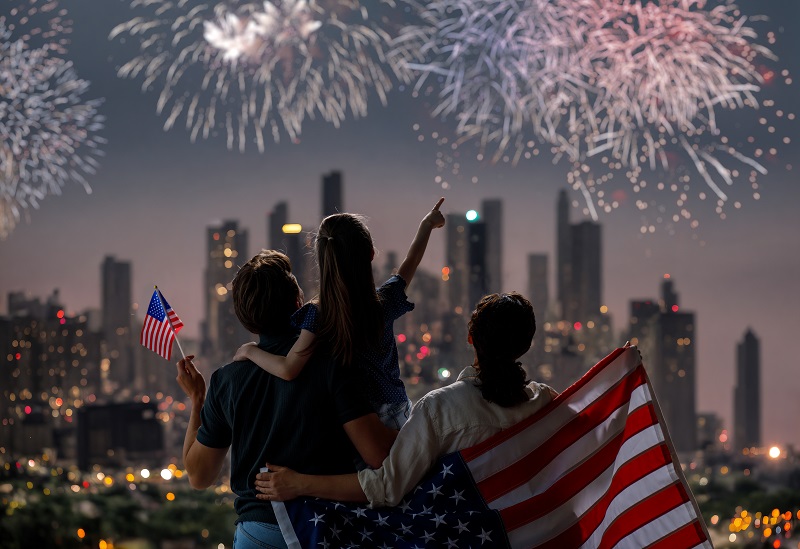
As the 4th of July approaches, excitement for fireworks and related festivities is rising. However, it is crucial to prioritize hearing protection during these celebrations, whether engaging in lighting fireworks at home or observing a public display. If you aren’t careful, your favorite fireworks display could lead to hearing loss.
Fireworks and Hearing Loss: The Risks of Fireworks to Your Hearing
Fireworks can generate noise levels between 150 and 170 decibels (dB), louder than an airplane engine (120–140 dB). The World Health Organization recommends that adults avoid exposure to sound levels above 140 dB, while children should avoid exposure to levels exceeding 120 dB. To ensure safety, maintain a distance of at least 15 to 20 meters from fireworks reaching 170 dB. Increase this distance by 50 to 60 meters for children, and infants should altogether avoid fireworks displays due to their heightened sensitivity to loud noises.
Exposure to high sound levels from fireworks can lead to:
• Tinnitus (ringing in the ears).
• Temporary threshold shift, a short-term hearing loss typically lasting up to 24 hours.
• Permanent, irreversible hearing loss.
Protecting Your Hearing
You can reduce the risk with these hearing protection options:
Foam Earplugs- Affordable and widely available at pharmacies or online, costing as little as $0.50 per pair when bought in bulk.
Earmuffs- These cover the ears with sound-dampening materials and are suitable for adults and children. They’re ideal for loud environments like concerts, power tool use, or fireworks displays.
Custom Earplugs- An audiologist can create custom earplugs based on impressions of your ears for a tailored fit.
Always wear one of these protective options, whether handling fireworks or watching from a distance.
What to Do If You Suspect Hearing Loss
If you notice any changes in your hearing following exposure to loud noises, we advise you to arrange a hearing assessment with a qualified healthcare professional. A thorough evaluation will help ascertain whether your hearing loss is temporary or permanent.
Frequently Asked Questions
Fireworks can produce noise levels between 150 and 170 decibels, which is louder than an airplane engine. Exposure to such high noise levels can cause tinnitus, temporary hearing loss, or even permanent damage. The World Health Organization advises adults to avoid sounds above 140 dB and children to avoid sounds exceeding 120 dB to protect their hearing.
To minimize hearing damage, adults should stay at least 15 to 20 meters away from fireworks producing noise levels of 170 dB. For children, this distance should be increased to 50 to 60 meters, and infants should avoid fireworks displays altogether due to their sensitive hearing.
Effective hearing protection options include foam earplugs, which are affordable and widely available; earmuffs that cover the ears with sound-dampening materials and suit both adults and children; and custom earplugs made by audiologists for a precise fit. Wearing any of these can significantly reduce the risk of hearing damage during fireworks.
Yes, exposure to the extremely loud sounds generated by fireworks can result in permanent and irreversible hearing loss. Even short-term exposure without protection can cause tinnitus or temporary hearing loss, so it’s critical to use proper hearing protection to avoid lasting damage.
If you notice any changes in your hearing, such as ringing or difficulty hearing after exposure to fireworks, you should schedule a hearing assessment with a qualified healthcare professional. This evaluation will determine if the hearing loss is temporary or permanent and guide appropriate treatment.
Infants are especially sensitive to loud noises and should avoid fireworks displays to prevent potential hearing damage. Their auditory systems are more vulnerable, and exposure to extremely loud sounds can cause harm that may be more severe than in adults or older children.