
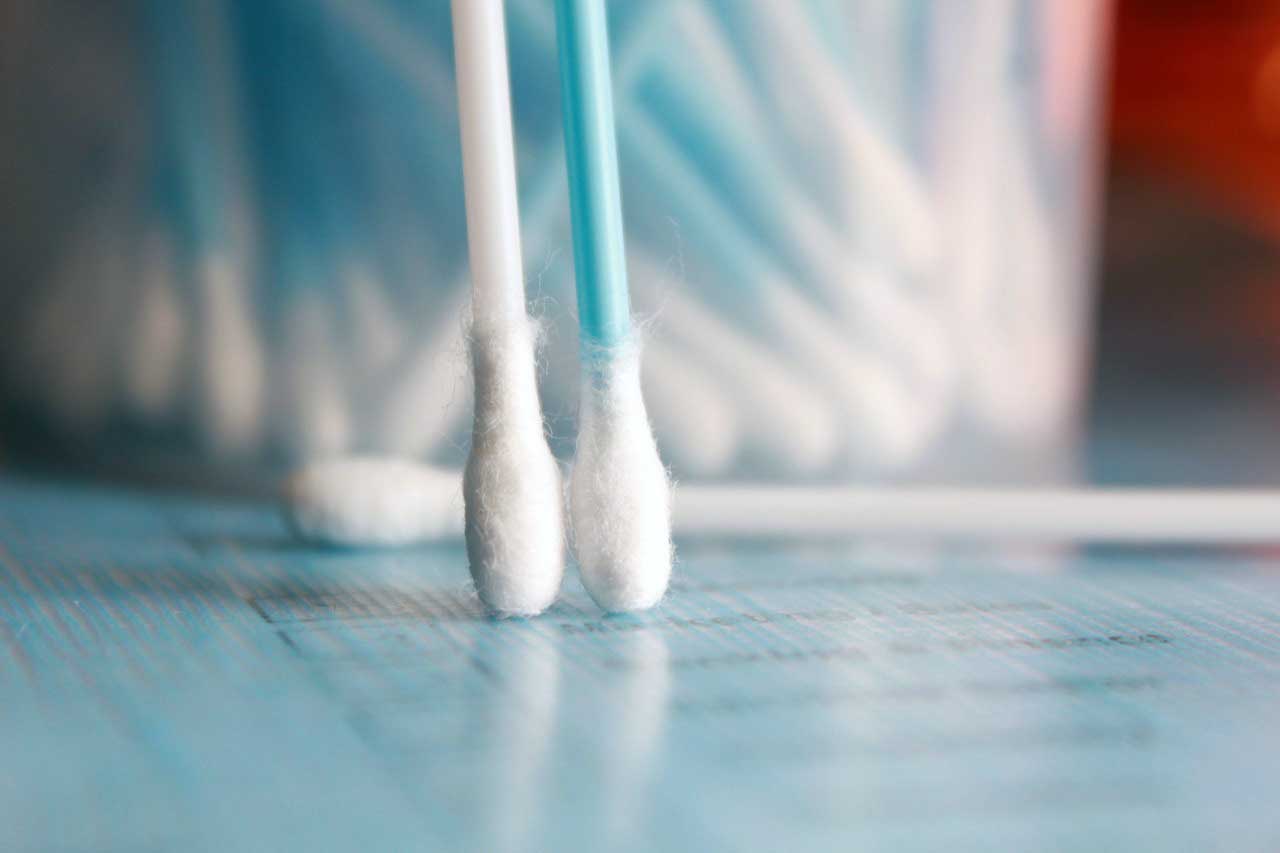
It’s not uncommon for a person to use cotton swabs, or Q-Tips, to remove excess earwax. Cleaning your ears is a habit that many have and don’t think too much of. However, sticking cotton swabs, or anything into your ear, is not recommended. What you think is a healthy habit may be damaging your hearing.
Using cotton swabs to clean the ear can cause damage to the ear canal, can puncture an eardrum, can cause impacted earwax, and could even lead to hearing loss. In fact, the normal production of earwax, or cerumen, is healthy. Earwax helps protect the ears, and it acts as a self-cleaning agent. Earwax protects sensitive ears from bacteria, dust, and debris, and helps keep the ears lubricated. Your ears are self-cleaning, so earwax and skin cells will slowly migrate from the eardrum to the opening of the ear. Once it gets to the opening of the ear, your earwax will dry up and fall out on its own.
Since your ears are self-cleaning, ideally you should not have to clean them. For most people, washing just the outer ear with soap, water, and a washcloth is enough. But we don’t live in a perfect world, and some people produce excessive earwax. A buildup of earwax can be painful and can also lead to partial hearing loss. Also known as cerumen impaction, earwax buildup may cause one or more of the following symptoms:
• Coughing
• Ear(s) that feel full or “plugged.”
• Earaches
• Itchy Ear(s)
• Discharge from the ear(s)
• Ear odor
• Hearing loss
• Tinnitus (ringing or noise in ear)
If you feel the need to safely clean your ears, gently wash the external ear with a washcloth. It is important that you do not insert anything into the ear canal. However, if you have heavy earwax buildup, a trip to your doctor may be warranted. An audiologist can safely remove excessive earwax for you and can give you advice on how you can safely clean your ears at home.
Frequently Asked Questions
Using cotton swabs or Q-Tips to clean your ears is not recommended because it can damage the ear canal, puncture the eardrum, cause impacted earwax, and potentially lead to hearing loss. These tools can push wax deeper, worsening the problem.
Earwax, or cerumen, is a protective substance produced by your ears to trap bacteria, dust, and debris, while keeping the ear canal lubricated. It also serves as a natural self-cleaning agent, so normally it is healthy and beneficial, not harmful.
Excessive earwax buildup, known as cerumen impaction, can cause symptoms like coughing, a feeling of fullness or plugging in the ear, earaches, itching, discharge, odor, hearing loss, and tinnitus (ringing or noise in the ear).
The safest way to clean your ears is to gently wash only the outer ear with soap, water, and a washcloth. It is important not to insert anything into the ear canal, as this can cause damage or worsen wax buildup.
If you experience heavy earwax buildup that causes discomfort, hearing loss, or other symptoms, you should visit a doctor or audiologist. They can safely remove the wax and provide advice on proper ear care to prevent future problems.
Yes, impacted earwax can partially block the ear canal and reduce hearing ability, leading to temporary hearing loss. Removing the blockage usually restores hearing once the excess wax is safely cleared.