
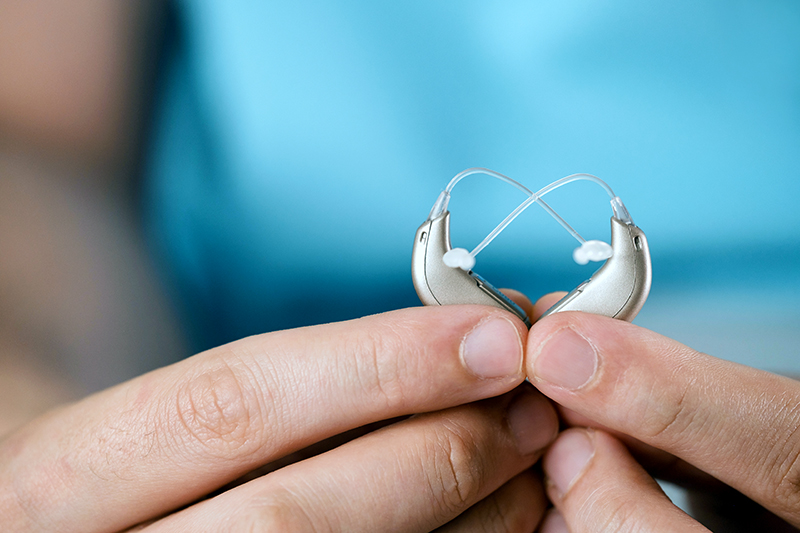
Disregarding the use of hearing devices could lead to missed opportunities. It is imperative not to store away hearing aids prematurely; instead, you should wear your hearing aids every day. Despite the initial fitting with advanced technology, some users abandon the consistent use of their devices. Consequently, rather than facilitating enhanced auditory ability, improved well-being, and active participation in social activities, the hearing aids remain dormant, accumulating dust in a storage container or drawer.
If you or a family member can identify with this situation, rest assured that you are not alone. A UK study suggests that 1 in 5 individuals with hearing aids choose not to utilize them. However, abstaining from recommended hearing technology can impact one’s capacity for effective communication and significantly influence overall health. It is imperative not to forgo hearing aids even for a single day.
Reasons to Wear Your Hearing Aids Every Day
Hearing Issues Are Also Chronic Conditions
It is imperative to recognize that neglecting the management of hearing loss is a concern equivalent to disregarding the treatment of asthma, diabetes, or cataracts. Hearing loss, a prevalent and persistent physical health condition, typically progresses over time. Without timely intervention, the likelihood of recuperation or effective control diminishes.
Increased Dementia Risk
Are you aware that hearing loss can lead to social isolation and increased cognitive effort, thereby significantly elevating the risk of cognitive decline and dementia? Interestingly, a recent study demonstrated that hearing aids and audiologic counseling resulted in a nearly 50% deceleration in cognitive decline among elderly individuals at heightened risk.
Relieving Tinnitus
Hearing loss is a predominant factor contributing to tinnitus, manifesting as ringing, buzzing, or humming in the ears, prevalent in approximately 90% of tinnitus cases. Hearing aids can enhance auditory perception and, in certain instances, may mitigate tinnitus symptoms, diverting the brain’s attention from the distressing ringing.
Falling Risks
The vestibular mechanisms within the inner ear significantly impact an individual’s sense of balance. Consequently, hearing loss amplifies the susceptibility to falls. Even a minor degree of hearing impairment can triple the propensity for an individual to endure a fall. Conversely, a research study spearheaded by University of Michigan researchers established a 13% reduction in the likelihood of fall-related injuries among elderly individuals who adopted hearing aids.
Connection to Depression
Studies have indicated a 47% elevated risk of depression among elderly individuals with hearing impairment. Conversely, findings from a specific investigation have revealed noteworthy enhancements in mental well-being among adults utilizing hearing aids. Additional research has similarly demonstrated a reduced likelihood of experiencing depression in this population.
After acquiring hearing aids, integrating them into daily life may present challenges. However, neglecting the prescribed technological intervention by your hearing care professional can have significant ramifications. Spontaneous improvement in hearing is uncommon, and auditory deprivation may lead to future complications. Patience and perseverance are crucial in gradually acclimatizing to hearing aids. With time, the seamless incorporation of this technology will likely enhance your auditory perception and comprehension.
Frequently Asked Questions
Wearing hearing aids daily is crucial because hearing loss is a chronic condition that typically worsens over time. Consistent use helps maintain auditory ability, improves overall well-being, and supports active social participation. Neglecting to wear hearing aids can lead to further deterioration and missed health benefits.
Hearing loss increases social isolation and cognitive effort, significantly raising the risk of cognitive decline and dementia. Studies show that using hearing aids along with audiologic counseling can slow cognitive decline by nearly 50% in elderly individuals at high risk, promoting better brain health.
Since hearing loss is linked to about 90% of tinnitus cases, hearing aids can improve auditory perception and may help alleviate tinnitus symptoms by diverting the brain's attention away from the ringing or buzzing noises.
Yes, hearing loss impairs balance and increases the risk of falls. Studies indicate that even mild hearing impairment triples fall risk, while the use of hearing aids can reduce fall-related injuries by 13% among elderly individuals.
Hearing loss is associated with a 47% increased risk of depression in older adults. Conversely, studies have found that using hearing aids improves mental well-being and decreases the likelihood of experiencing depression in this population.
Yes, initial challenges are common when integrating hearing aids into daily life. However, patience and perseverance are important, as gradual acclimatization leads to enhanced auditory perception and improved comprehension over time.
Discontinuing the use of hearing aids can lead to auditory deprivation and hinder hearing improvement. Since hearing loss typically does not improve spontaneously, neglecting hearing aids may cause further complications and reduce quality of life.