When patients acquire hearing devices, they often experience a substantial improvement in their hearing capabilities. Nevertheless, further fine-tuning is typically necessary. This is why follow-up appointments with an experienced hearing care professional are essential. As individuals navigate various environments, they may encounter sounds that appear unusual. During these follow-up sessions, providers use feedback to refine and customize hearing aid settings to address unique conditions better. Additionally, at-home resources, such as using audiobooks for hearing, can serve as valuable tools to adapt to new auditory experiences and refine your hearing.
Audiobooks for Hearing: How to Refine Your Hearing
Active Listening
When engaged in conversation and active listening, the brain filters out background noise, focuses on the speaker’s voice, and attempts to match the sounds to memory. For those who have experienced prolonged hearing loss, certain words may have been missed or misheard over the years. Upon receiving hearing aids, it is important to recognize that the brain will need time to readjust to these familiar sounds. Engaging with audiobooks provides an opportunity to focus solely on the spoken words, facilitating practice in active listening skills without the distractions and challenges often present in uncontrolled settings, like background noise.
Finding Audiobooks
Fortunately, getting access to audiobooks isn’t difficult or expensive. Resources can be easily found at your local library and online. The vast range of subjects and genres found in audiobook format guarantees any interest or taste would be satisfied.
Local Library Resources
The library is an incredible resource for discovering audiobooks and their printed counterparts together, allowing for read-along sessions to help with comprehension of sounds at the beginning. Many modern library systems have online resources such as websites or device apps enabling you to access audiobooks anytime.
Online Resources
Many libraries’ online resources allow you to search, checkout, and download audiobooks and PDFs directly to your phone or computer without the need to return physical copies. Other websites like LibriVox.org have libraries of public domain titles read by volunteers that are available free of charge.
Digital Options
While some people prefer older formats like CDs, the benefits of newer technology can make audiobooks more accessible, such as ease of access and Bluetooth connections.
Using Audiobooks to Acclimate to New Hearing Aids
Audiobooks provide an opportunity to engage with a singular voice, which can enhance focus and help prepare individuals for participating in more dynamic conversations.
Read it Again
Rereading books can evoke a sense of comfort, similar to returning to a familiar setting after a long day. Each page offers not only nostalgia but also the reassurance of well-established narratives and characters. Within the pages of a treasured story lies a unique solace found in the consistency of its language and the familiarity of its personas.
Read Along
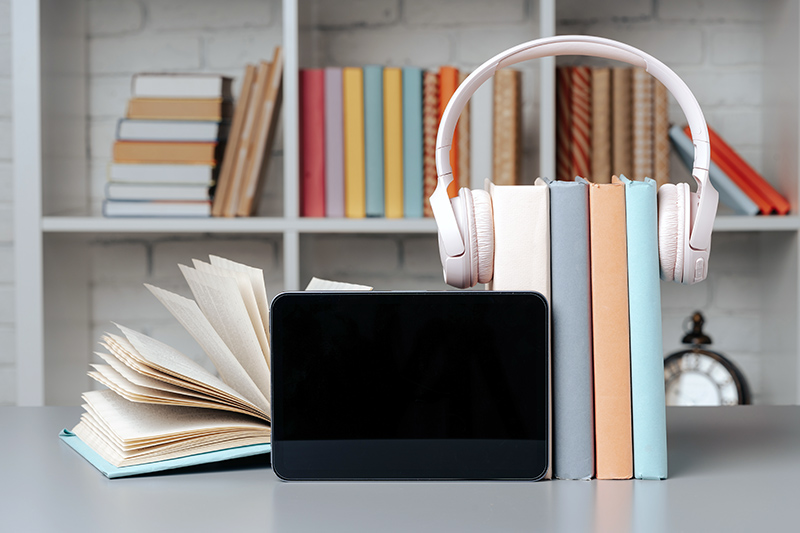
Choose books where you can get copies of both Audio and Text and read along; this can help your brain process speech after being out of practice. Reading along gives your brain a reference that helps prevent mishearing words and exposed sounds that are difficult to comprehend.
Take Breaks
Whether reading along or practicing active listening, your brain will get tired quickly, so limit your practice time to 30 minutes or less in the beginning.
Minimize Distractions and Background Noise
Listening to audiobooks in a closed, quiet environment can enhance your ability to focus and practice active listening.
Change Things Up
It’s important to continue to challenge your brain as you move forward. Without stimulation, your hearing abilities can plateau and stifle progress. Changing something about your habit every time you reach for a new audiobook can help you continue to move forward. As you progress and improve, you can challenge yourself further:
• Re-listen to a previous selection without the book’s assistance
• Look for different recordings that feature a different voice
• Change genre or style, like fantasy to mystery or nonfiction to fiction
• Introduce background noise or change locations
As you progress in your hearing rehabilitation, consider contacting your audiologist. They can assist you in further enhancing your hearing skills.
Frequently Asked Questions
Follow-up appointments with a hearing care professional are crucial because they allow for fine-tuning of hearing aid settings based on real-world feedback. This customization helps address unique environments and sound challenges that patients encounter, ensuring optimal hearing performance.
Audiobooks offer focused listening practice by presenting a single voice without the distractions of background noise. This helps users improve active listening skills and retrain the brain to recognize spoken words more accurately, facilitating smoother adaptation to hearing aids.
Audiobooks can be found easily at local libraries, many of which provide online digital access through websites or apps. Additionally, free resources like LibriVox.org offer public domain audiobooks read by volunteers, making it affordable and convenient to access a wide variety of materials.
Reading along with audiobooks provides a visual reference that helps the brain match written words to spoken language. This method reduces mishearing and improves comprehension by reinforcing the connection between sounds and their meanings, especially helpful for those new to hearing aids.
It is recommended to limit listening or read-along sessions to 30 minutes or less initially because active listening can be mentally exhausting. Taking breaks allows your brain to rest and gradually build endurance for longer listening periods over time.
To avoid plateaus, regularly change your audiobook listening habits by trying different voices, genres, or introducing background noise and varied locations. These changes challenge your brain and continue stimulating auditory development, fostering ongoing improvement.
Listening to audiobooks in a quiet, closed environment minimizes background noise, allowing you to fully focus on the spoken words. This enhanced focus is critical for effective active listening practice and helps improve auditory processing capabilities.
You should consider contacting your audiologist throughout your hearing rehab, especially as you progress or encounter challenges. Audiologists can provide professional guidance, adjust hearing aid settings, and recommend strategies like audiobook use to further enhance your hearing skills.